Monday, 6 September 2021

Journeys by the Wall - a sermon for the Feast of the Translation of Cuthbert

Behind the garden of our new home in Carlisle stands the smart Georgian Parish Church of St Cuthbert’s Carlisle. In many ways it is larger, and dare I say it, more up market counterpart to its name’s sake in Haydon Bridge. With box pews, a gallery, and pulpit that can roll into a central position, it has the same feel of a preaching house which was the original intention for many of these Georgian buildings.

But this quite ‘modern’ style belies its ancient origins which are hidden in plain sight. Unlike the Cathedral which sits on the other side of our house, St Cuthbert’s is not orientated east-west as we would expect a Church to be. Rather it stands alongside Blackfriars street which is itself an extension of Botchergate and the A6. This road follows the line of the ancient Roman road which ran to the entrance to the Roman Fort which stood roughly where Carlisle Castle now stands.

This orientation reminds us of the ancient lineage of St Cuthbert’s in Carlisle which, unlike many of the venerable Churches of St Cuthbert gets its title not from the fact that Cuthbert’s community and his relics rested there, but that Cuthbert himself visited and preached there. 

In both Bede’s Ecclesiastical History and his Life of Cuthbert we hear how, in 685 Cuthbert came to Carlisle to ordain deacons. He did that in a church which has been originally a house running alongside the Roman street plan of Carlisle.

It was at that Church, on the site of the present St Cutbert’s, that Bede tells us Cuthbert met with the Royal Abbess Aelfflaed as news of the unexpected death of her father King Ecgfrith in battle, nephew of St Oswald and king of Northumbria, was heard.

According to Bede, Cuthbert’s meeting with Aelfflaed in Carlisle fulfils an earlier prophesy by Cuthbert to Aelfflaed that Ecgfrith would die in battle, and that when that occurred Aelfflaed should call for her holy and learned Uncle Aldfrith from Iona to take the throne of Northumbria. 

This Aldfrith duly did, reigning for twenty years, cementing with it the Christian culture and life which had begun with the victories of Oswald and missions of Aiden a generation earlier. His reign ushering in, through his support of Bede and the learning at Wearmouth-Jarrow and Lindisfarne, Northumbria’s Golden Age.

In Bede’s narrative placing of this summit in Carlisle is no accident.

Firstly Bede is reminding us of how intertwined the life of Cuthbert was with political life of his time. We remember with gratitude today Cuthbert’s influence as a man of prayer and holiness. But we also remember Cuthbert’s role as a counsellor to kings and princes, guiding their actions through the certainties of his faith.

Secondly Bede is reminding us of the interconnected geography that tied the early mediaeval world together.

By the time Cuthbert and Bede the line of the wall which Carlisle and these parishes stand alongside had long ceased to be the barrier and boundary that its Roman builders had intended it to be. 

Instead the wall and the land which it covered was at the heart of a nexus of journeys of faith and culture and power which flowed from Ireland and Iona to Lindisfarne and Bamburgh and back again. To hear the news of Ecgfrith’s death in Carlisle and, we imagine, for Aellflaed to send for Aldfrith from Carlisle reminds us that Carlisle stood at the centre of the east-west information super-highway that Hadrian’s Wall had become by the end of seventh century.

As a history lesson this is all very well and good, but you might wonder why this is important to us as we gather to mark this Feast of the Translation of Cuthbert.

Well, this story is important because it asks us to rethink our own preconceptions of our geography, and through that rethink how and where we find God in the supposed certainties of the world around us.

Next year, as many of you might know, is the 1900th anniversary of the beginning of Hadrian’s Wall in 122AD. Next year we will be inundated with opportunities to visit well-loved sites, to see Roman soldiers on manoeuvre, and to recognise the extraordinary political, cultural, and social legacy of Hadrian’s Wall. But as we do so I can guarantee one thing. All the maps we will see, all the images we will share will place the wall and its line on a North-South axis. 

That is after all how we instinctively see it. But more than this, this instinct runs deep into our imaginations. The historian Peter Davidson argues that we all carry our own idea of north within us. 

If, he suggests, we say we will leave for the south tonight, we conjure up images of travelling for pleasure and places of leisured exile. But if we saw “we leave for the north tonight” we immediately think of “a harder place, a place of dearth: uplands, adverse weather, remoteness from cities”. If spoken in a thriller, this portentous phrase “we leave for the north tonight” would lead to, he says, a “fiction of action, of travel, of pursuit over wild country”.

We can, I hope, all imagine our own way into not only the practical, but also the imaginative patterns this north-south thinking draws us into. Our lives and how we orient them are so often suffused with this north-south thinking, suffused, if you will, with an implicit “Borealentalism”, that we don’t even notice.

But as we journey through life we recognise that the journeys and orientations that we find ourselves taking are not always what we expect them to be. 

Our Psalm this evening, Psalm 121, is my favourite psalm. The imagery of lifting our eyes to the hills is, like so much of our perception of the world, suffused with this north-south thinking. When we close our eyes and think of the hills we lift our eyes to I would wager most of us imagine we are looking north. 

For scholars this is a known as a psalm of ascent. Written and first prayed in the imaginative world of the worship of ancient Israel where the eyes of the faithful would be lifted to the Temple in Jerusalem and temple mount on which it sat. But as this wonderful psalm has become internalised into the life of our prayer and worship, over countless generations, it has become de-coupled from this singular meaning. 

As we pray this Psalm we are reminded of God’s presence with us in all the faltering steps that we take through life. That God will not “suffer our foot to stumble”. That God will guide and watch over us as we wake and sleep, that God will watch our going out and coming in.

What this psalm reminds us is that God is with us wherever and however we move through life. We might live fixated on the journeys north and south and how things ought to fit together, but we discover that life is not like that, but in that seeming uncertainty God – the make of heaven and earth – remains close to us, guiding us through the unexpected and uncertain journeys of life.

As we continue to read Bede’s history we find again again how God guided and travelled with his people – as he midwifed the Golden Age of Northumbria not as we might expect from the civilised south to the wasted north, but flowing with Aldfrith west to east, through Carlisle and these Parishes by the Wall from Iona to Bamburgh. 

As we celebrate the Feast of the translation of Cuthbert we remember that God remained with and guided the uncertain journeys of the Community of Cuthbert as they moved through these northern lands, from Lindisfarne, through Haydon and Beltingham and Carlisle and beyond. Not in the way and manner they might have thought or expected, but guiding their every step, nonetheless.

And as I return to this Church today I cannot but reflect on the journey we have taken. Not one we planned or expected, but one which we pray God is guiding us through. So, whatever the future may hold for us, and for these Parishes by the Wall, we might know that although the journey may not be as we expect it, or imagine it to be, God will watch over our:

going out and our coming in, from this time forth and for evermore.


Sunday, 25 July 2021

Pilgrim paths out of lockdown - a sermon for the Feast of St James the Apostle


The road seen, then not seen, the hillside
hiding then revealing the way you should take,
the road dropping away from you as if leaving you
to walk on thin air, then catching you, holding you up,
when you thought you would fall, 

That is the beginning of the poem Santiago written by the English poet David Whyte from his collection Pilgrim. Through this sequence he reflects on the experience of walking the Camino de Santiago de Compostella – that great pilgrimage route across Spain to the shrine of St James the Apostle whose feast we celebrate today.

It remains one of my ambitions to walk the Camino, to follow the path of countless others along those lanes that lead to Compostella. A practice which, like so much, has been curtailed by these years of pandemic. But a practice which remains extraordinarily and stubbornly popular in our supposedly secular age. 


A few years ago, in the parish where I was Vicar, our Lent course reflected on the Martin Sheen film The Way where the lead character mourns the death of his son by walking the Camino. This was such a powerful experience for one in the group that only a few short months later she packed a rucksack and got on a plane to France and spent six weeks walking the 780km from St. Jean Pied de Port in the French foothills of the Pyrenees to Compostela.

I’ve never spoken to her directly about David Whyte’s poems, but I remember us sitting together on her return clearly physically and spiritually transformed by the experience. When I remember that conversation my thoughts are drawn to David Whyte’s reflection on the deep and transformative spiritual power of pilgrimage:

and the way forward always in the end
the way that you followed, the way that carried you
into your future, that brought you to this place,

As we continue to walk through this pandemic-season many of us can only dream of the journeys and pilgrimages that we would like to take. The holidays cancelled, the meetings lost, the places we have not been as we have sought to keep each other safe.

Today, for instance, I would normally be preparing to leave for my annual week of retreat. But this precious week of prayer and singing in Tewkesbury Abbey has been cancelled for a second year in succession.

However, as things begin to open up again our eyes might rightly begin to look to the journeys we could begin to make.

On this feast of St James, and as we reflect on this theme of pilgrimage, it is worth remembering that the greatest account of pilgrimage in the English language – Chaucer’s Canterbury Tales – begins as the disparate group of pilgrims emerge from a time of constraint and limitation.

The historian Tom Holland has suggested that this was not merely the long months of winter, but possibly also a season of plague that regularly would blight fourteenth-century London. Reflecting on his own experience of London locked down by the pandemic, Holland has speculated on what the source of the elation of Chaucer’s pilgrims:

What joy, then, when April arrived with its ‘shoures soote’, to bid farewell to a city that might well have been rotten with plague the whole winter, to feel the ‘sweete breeth’ of the open road in spring, and to head for the shrine of that blissful martyr St Thomas Beckett, ‘that hem hath holpen whan that they were seeke.’

There will be, for many of us, an excitement at the possibilities that the easing of restrictions will bring. Some of us will be like that excited group of travellers gathered by Chaucer in that Southwark Tavern. Able to journey out into the world that has seemed so suddenly small over these long months.

For many of us the journeys we take this summer will be a pilgrimage of sorts. This week a friend stayed in Carlisle overnight on her way to Lindisfarne. Not a formal pilgrimage in the pattern of the Camino, but a journey to find some stillness and peace after the restlessness of this last year.

If we journey like this, we follow in the footsteps of James and the other Apostles. Through the Gospels we hear again and again how Jesus would travel to places of seclusion, to places of rest against the restlessness of his mission to the lost sheep of Israel. These physical journeys to places of rest revitalising him for the greater journey ahead.

As we remember St James we can imagine how in his missionary journeys which to Spain and to a martyrs death, would have been underpinned by these personal journeys of revitalisation and rest.

However, as restrictions are lifted we need to remember that not all of us will view this as a time of liberation. For those who remain clinically vulnerable, for those who have drawn inwards through this time, the opportunity to be loosed from the burdens of a Covid-winter will not be met with the enthusiasm and joy of the modern-day equivalents of Chaucer’s Canterbury Pilgrims.

But this does not mean that journeys of self-discovery are not open to those who are unable to make the physical journeys that so many pilgrimages represent.

The physical journeys we make by way of pilgrimage are merely an outward and visible sign of the deeper and more transforming inward and spiritual journeys God calls us all to make.

St Augustine – on whose tradition this Priory and Cathedral was founded – begins his Confessions, his very person account of his own lifelong journey of faith, with a deep recognition of the inward journeys we are all called to make. Beginning in prayer he says:

O Lord, you have made us for yourself, and our hearts are restless until they find their rest in you. 

Every part of our life, Augustine reminds us, not just the physical journeys we choose to make, are a restless journey towards the rest we desire to find in God.

In this way far from limiting our pilgrimages and journeys of faith, this last year has, for many been a revealing time of inner journey. Locked down, we have all had to find again those sources of strength and purpose from within ourselves that we can all too easily miss in the restlessness of our supposedly normal lives.

My experience through lockdown – which I know was replicated by many others in church settings – was that as our world shrank many found a renewed focus on prayer and the spiritual journeys God invites us all to take. Either through online communities of prayer or individually we found more and more people taking inwards journeys, seeking rest for their restless hearts amidst the turbulence and uncertainty of this last year.

As we continue to move through this period of change we will all be called and compelled to journeys we have not been able to make over this past year. As we embark on those outward journeys we need to not lose sight of the inner journeys that God invites us to take.

So whatever the paths that we take out of this pandemic may be, they do not simply lead us back inexorably to whatever we think normal might be.

Rather that the paths we take will instead be pilgrimages, leading us to places of rest for our restless hearts. Paths which, in the words of David Whyte’s poem Camino

brought you here to walk
under one name and one name only,
and to find the guise under which all loss can live;
remember, you were given that name every day
…
pilgrim they called you,
pilgrim they called you again and again. Pilgrim.


Sunday, 14 February 2021

"He was transfigured before them": A Sermon for the Sunday next before Lent.

2 Kings 2.1-12, Psalm 50.1-6, Mark 9.2-9


In the South Quire Aisle of Durham Cathedral is "The Transfiguration Window". Commissioned by the Friends of Durham Cathedral and installed in 2010 it is a glorious evocation of the story of the Transfiguration which we heard in today’s New Testament Reading. Created by Tom Denny – one of the finest,  if not the finest stained-glass artists in contemporary Britain – it uses a palate of whites, golds and burnished bronze to imagine the vivid brilliance of the that moment when, as we heard in our reading: 


Jesus was transfigured before them, and his clothes became dazzling white, such as no one on earth could bleach them.


The window was commissioned in honour of Michael Ramsey who had been a Canon of Durham Cathedral and later Bishop of Durham before becoming Archbishop of Canterbury. The theme of the window draws on the central role that the Transfiguration played in Ramsey’s understanding of the Gospel and Faith and his insights into the Transfiguration continue to guide us as we encounter again this wonderful and bewildering story.


The story of the Transfiguration is a tricky one to categorise.


Its telling is, in many ways, straightforward. Jesus takes his inner circle of disciples – Peter, James and John – to high mountain. There Jesus is transfigured before them. Visions of Moses and Elijah appear around Jesus and a voice from heaven declares Jesus to be the Son of God. Then, as quickly as it came, the brilliance of this moment evaporates, and the stunned disciples are left not knowing what to do or what to think. In their shock Jesus tells them not to say anything of this experience until after “the Son of Man had risen from the Dead”.


What are we to make of this story?


Well one is to place it into a larger narrative. This is clearly what the compilers of our lectionaries think. Each year we hear this story on the last Sunday before Lent as a prelude to our Lenten journey. In this way it acts a little like the overture to an opera or musical, showing us, as we stand at the foot of the mountain of our Lenten journey, a glimpse of the brilliance and glory that lies at the end of this journey.


Another approach is to try and smooth it into a more logical form. I remember at Theological College being told by a tutor that the Transfiguration was really a resurrection appearance pulled back into the story by the Gospel writers to provide a taster of what is to come after. The implications being that we need to editorialise this story to ensure it makes sense on terms we can understand.


Michael Ramsey, in his reflections on the Transfiguration, pulled against this tendency to try to make this complicated and challenging story make sense by neatening it out into a shape and structure that makes sense for us. For Ramsey the key to the Transfiguration, the key to faith, was precisely that it belies neatness, logic and simple categorisation.


It is clear the whatever we make of the Transfiguration it is intended as a glimpse of the truth of who Jesus is. Jesus is the great "both/and": he is both the friend who walks up the mountain with his friends, and the figure in brilliant white who Moses and Elijah come to in homage."


In this way we don’t make sense of the Transfiguration by trying to place it neatly into a bigger story. We make sense of the Transfiguration by recognising the brilliance of the future it points us towards bursting unexpectedly and unwarranted into the supposed neatness and order of our present.


The Transfiguration is then a glimpse of what might be possible. But it is not a truth that happens inevitably through the supposed ordered patterns of human progress. It is a truth that we discover when we allow God to break into our lives. When we catch those glimpses of God’s love and allow ourselves to be transformed by it. As Ramsey says:


[The] gospel of Transfiguration… transcends the world and yet speaks directly to the immediate here-and-now. He who is transfigured is the Son of Man; and as he discloses on the holy mountain another world, he reveals that no part of created things, and no moment of created time lies outside the power of the Spirit, who is Lord, to change it from glory to glory.


This might seem like a complex idea, but it is a truth we know and experience. 


We have been told that the world should progress in some sort of sensible order. We are brought up to believe that things should get better year and year, that we should get better off year on year. But the reality is that the truths that really define us, that make sense of who we are do not come through the steady movement of progress – if that even exists. The things that define us come to us in unwarranted and unexpected moments of transfiguration.


How many of us who have fallen in love did so because of a well-ordered plan, and how many of us fell in love like a bolt out of the blue? 


How many of us with children thought we could plan and order and structure this in a neat way, only to find that in the chaos and mess of parenthood we found a joy we could not have planned for or imagined?


How many of us looking back to when we last heard this story in worship, sitting comfortably in our pews in Church a year ago, could have known what was lying ahead of us?


How many of us, looking back on our lives, can see a neat and ordered progression, and how many of us recognise that those things that really define who we are came - whether in moments of wonder and glory or pain and suffering - as bolts out of the blue.


What Michael Ramsey reminds us is that life is not neat or ordered. It is messy and untidy and into that messiness God is constantly breaking in even when it seems that the chaos and darkness have overcome us. As Ramsey says of the darkest experiences of suffering: 


it can make all the difference to look towards the cross of Jesus Christ. From there the power of transfiguring comes. And it helps to know that in the suffering of Jesus God himself is there... If we are near to Jesus we are helped to realise that the world-to-come is near, we can know that the perspective of heaven about which Jesus spoke to the dying thief is near.


As we stand on the cusp of Lent we are rightly guided and inspired by the vision of the Transfiguration as we begin this journey again. But this should not mean that we miss the deeper truth of the Transfiguration. 

And here we might return to that window at Durham Cathedral. Into that window Denny has woven images from the bible, the history of Durham, and the figures of ordinary people looking on. Amongst them is balding and slightly stooping figure we imagine to be Ramsey looking up at the vision on the mountain. In this helter-skelter of images we are invited to be part of this picture and encouraged to recognise that, through all the complex and rich textures of our life and history, God’s transfigured glory continues to shines through. 


That God in Jesus is constantly breaking into our lives, transforming and transfiguring them by showing us, even in the darkest of places and often in the most unexpected ways, the vision of his glory.


Images of "The Transfiguration Window" at Durham Cathedral taken by Michael Sadgrove

and used with permission and thanks.


Monday, 11 January 2021

"The voice of the Lord": a sermon for the Feast of the Baptism of Christ


In Psalm 29 there are, hidden in plain sight, several overlapping themes within the traditions of ancient near-east religious poetry. 


The first speaks of the supreme power of God. Sharing similarities with other ancient sources, this Jewish text praises the primeval creative power of God:

The voice of the Lord is upon the waters;
      the God of glory thunders;  
   the Lord is upon the mighty waters.

The second is the placing of his power not just in God-self, but in God’s voice. Some scholars have noted the links between this Jewish description for the power of the voice of God, and other ancient near-East traditions where the fearsome voices of the gods imposed their will over the whole world. 

This leads to the third theme within the Psalm. That the voice of the one true God is not akin to the violent and warring thunder-gods of other traditions. The voice of God is creative and leads those who hear it to peace. As the Psalm concludes:

The Lord shall give strength to his people;  
   the Lord shall give his people the blessing of peace.

What this Psalm reveals to us that the voice of the God of Israel brought peace not the destruction of other gods. The blue-print for this creative voice comes in the first verses of the Book of Genesis. In the story of creation it is God’s voice which is the origin – the literal genesis – of the created order.

Then God said, “Let there be light”; and there was light. And God saw that the light was good.

In these verses we receive a pattern for the creating power of God’s voice. The first thing to notice is that the voice of God never tends to violence or destruction. It is not focused on the defeat of another primeval force, but in transforming that into the just and gentle rule of God’s rule. In the opening lines of Genesis the spirit of God moves over the chaos of the great deep and, as we hear God speak, we hear of the slow and steady transformation of that chaos into the beauty and order of creation.

The seconds thing to notice is that when we hear God speak, we hear a three-fold pattern which repeats not only through these opening verses of the book of Genesis, but which echoes through scripture. God’s voice pronounces God’s will: “Let there be Light”. Through that utterance God’s will is accomplished “and there was light”. And because this creation is formed by God’s will and voice,  we recognise that it is good.


On the Feast of the Baptism of Christ, we see this pattern of the creative power of God’s voice echo into this well-known story. Unlike the other Gospel accounts Mark does not offer an explicit account of Jesus’ birth – as we find in Luke and Matthew – or Jesus’ cosmic origins – as we find in John. But that is not to say there is not, what contemporary super-hero films call, an “origin story” in Mark’s Gospel. We hear this origin story as it echoes with God’s creating voice in Mark’s succinct account of Jesus’ baptism.

In those days Jesus came from Nazareth of Galilee and was baptised by John in the Jordan. And just as he was coming up out of the water, he saw the heavens torn apart and the Spirit descending like a dove on him. And a voice came from heaven, “You are my Son, the Beloved; with you I am well pleased.”

As with the creating-voice of God in Genesis we hear in this short but defining origin story the same three-fold movement we heard in the opening verses of Genesis.

God’s voice pronounces God’s creating-will: “You are my Son”. God’s creating-will is to be accomplished in Jesus, the beloved. And because this is God’s will, it is by definition a good thing which God takes pleasure in: “with you I am well pleased”.

In this deep tradition of the creating-power of God’s voice we are reminded of the power of words to create and form the world we live in. Not just in the fabric of our creation, but how this creating-voice can continue to echo into our own reality and experience.

We still live with that tension which Psalm 29 sought to overcome between the destructive and creative power of words; whether the words used, particularly from a position of power, are spoken in creative-power or spoken in destructive-malice and self-interest.

On Wednesday President Trump used the power of his voice and office to continue to pour doubt and confusion on the outcome of the American Presidential Election which was, at the same time, being formally ratified by members of Congress. You don’t need me to describe the horrific scenes that were created by these words, scenes of violence and wanton destruction that left five people dead.

As this crisis was still unfolding, Joe Biden – still waiting to be formally confirmed as the winner of the election – said this:

The words of a president matter. No matter how good or bad that president is. At their best, the words of a president can inspire. At their worst, they can incite.

On Wednesday we saw the deadly cost of what powerful words can do. Like the ancient thunder-gods of ancient near-east poetry, President Trump has taken his place in the long line of demagogues who have used the power of words to destroy for selfish ends rather than create for the common good.


We live in a world where we rightly cherish free speech. But we should not be mistaken into thinking that these words freely spoken, particularly in the mouths of the powerful, are a neutral thing. Words have power. If someone with a voice of power says again and again and again, against all the evidence that can be shown, that an election has been stolen, then it will create a world in which, for some people, that is true.

If some people play on the anxieties and worries of locked down population to say that a health emergency is a hoax, that the measures we are asked to follow are for malign ends and not for the safety of others, then some will come to believe that, and live that way, and there will be a cost to those words.

On the Feast of the Baptism of Christ we are reminded that words have power. Whoever we are, we need to remember that our words have power. As we use them, we need to follow that pattern which echoes through scripture and see that our words create a reality which is echoes with the creative voice of our Creator. So that when God looks on the reality we have created with our words God will look on it, and say that it is good.

Sunday, 6 September 2020

Voices from Vindolanda:  
A Sermon for the Thirteenth Sunday after Trinity

Ezekiel 33: 7-11

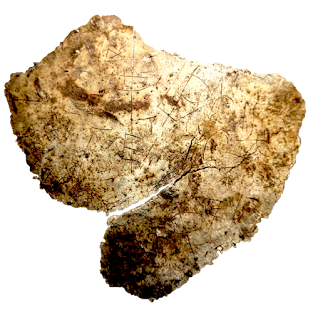
In August 2019 during the annual summer excavations on the site of the Roman settlement of Vindolanda fourteen fragments of a lead bowl were found. Although they were badly weathered close examination showed that the object – dating from sometime in the fifth century – to be a Christian artefact. Covered in simple Christian images – crosses and chi-rho, a fish, a whale, a happy bishop, angels, members of a congregation – experts believe the bowl to be a chalice. Found amongst the rubble of the wall of a sixth century church building this unique find casts a new light on one of the most poorly understood periods in British history.


Following the evacuation of the Roman garrisons from Britain, including the settlement at Vindolanda at the very beginning of the fifth-century our popular imagination sees the life of these islands plunged in what was known as the “dark-ages”. The Venerable Bede, in his Ecclesiastical History of the English People, says of this time that:

Then were all restraints of truth and justice so utterly abandoned that no trace of them remained, a very few of the people even recalled their existence.

So great was this darkness that Bede passes over almost two centuries of history in one paragraph. And we are left with the image of a land where warring bands of Celts and Saxons fought over the scraps of Roman Britain. All that was left, Bede says sorrowfully, was for "God in his goodness...[to send]...more worthy preachers of truth to bring them to the Faith".

Perhaps because the power of Bede's narrative the story we tell ourselves of the Church often falls easily into this pattern. This weekend we should have been marking our annual celebration of the “Way of Cuthbert” as we give thanks to God for the life and witness of our Patron and the communities of faith Cuthbert fostered and continues to encourage. Last week was the feast of St Aidan, that great saint from the generation before Cuthbert. On Lindisfarne there is a statue of Aidan holding the light of Christ which he brought – under the encouragement of the saintly king Oswald – into the darkness of this northern land.


We sit today as a community that draws from Cuthbert’s great example, and planted in the kingdom that Oswald and Aidan won for Christ. Had the world been different we would have walked our own pilgrimage in the Way of Cuthbert from Haydon Old Church to Beltingham, and as we look to renew the life of our Church buildings in the Haydon Churches project we plan to do so in the light of that heritage.
 
But the finds at Vindolanda should encourage us to think more deeply about our Christian heritage and how we continue to live in the light not only of Cuthbert and Aidan, but also those faithful Christians who etched the signs of their faith on that simple communion cup in those hidden and dark centuries between the twin lights of Rome and Lindisfarne.
 
The American Founding Father and President John Adams once said:
 
Facts are stubborn things; and whatever may be our wishes, our inclinations, or the dictates of our passion, they cannot alter the state of facts and evidence.
 
When we tell the stories of Aidan and Cuthbert we have become so used to the story of the “dark-ages” and of the godless and pagan land which they converted that, as we encounter facts like the finds at Vindolanda, we can find ourselves doubting the whole story. What, we might ask ourselves, does it tell use about the stories of our Christian past if we discover that Christianity was more established and more present in those dark centuries than we had thought?
 
Now please be clear, I don’t think anyone is in danger of throwing the baby out with the bath water, and suddenly casting Bede and his Ecclesiastical History as the Anglo-Saxon version of fake news. But the new reality that we have found does provide a pattern and encouragement for our faith which can perhaps provide a deeper model for our place and story of faith alongside the heroic virtue and holiness of Aidan and Cuthbert.
 
In our Old Testament lesson we hear God’s direct calling and commission to Ezekiel.
 
So you, mortal, I have made a sentinel for the house of Israel; whenever you hear a word from my mouth, you shall give them warning from me.
 
The call to Ezekiel to be a sentinel is not an idle one. Archbishop Stephen Cottrell has reminded us that Sentinel is one of the most powerful images of calling and commission used through the Old Testament. Used over thirty times, the call of the sentinel is to be a watchman, a lookout for the ways of God within the world. And this is not just a call unique to Ezekiel. In Isaiah it is the sentinel who looks for the coming of:
 
the feet of the messenger who announces peace,
who brings good news,
    who announces salvation,
    who says to Zion, “Your God reigns.”
 
Thomas Cranmer, when defining the call of the priest for the first time in the English language, lists the sentinel, along with messenger and steward, as the marks of the ministry of a priest as they:
 
proclaim the word of the Lord and…watch for the signs of God’s new creation.
 
Returning to Ezekiel we find the call of sentinel carries with it its own contemporary resonance as the prophet is called, as perhaps we are today, to stand in this time of Covid-Exile and search the horizon for the signs of  God’s faithfulness and restoration.
 
As we reflect not only on our own experience, but also of the hidden lives and voices of the faithful uncovered at Vindolanda we could do worse that to reflect on this call to be a sentinel.


If you spend time at Vindolanda and at the Roman frontier that lies to its north you get a glimpse of what it meant and means to be a sentinel. You stand patiently, day after day, scouring the horizon looking for signs. And as you see things you must interpret them and understand them and discern what it is that you see. It can be lonely work, and it is certainly work that can be boring and challenging. But if we are to see what lies ahead of us, we need our own sentinels looking at God and looking at the world for what is to come.
 
I might be, in fact I almost certainly am, romanticising the life of those Christians who etched their faith onto that cup. But I see them not as an aberration in the old story we tell of our Christian heritage. Instead like Ezekiel, I see them as sentinels scouring the horizons of their world and of God seeking the restoration which, in Aidan and Cuthbert, God faithfully brought.
 
As we look forward to what lies ahead of us we could do worse than to aspire to the faithfulness and tenacity of that voiceless community uncovered at Vindolanda as we continue to live the story of faith in these lands of which they, and Aidan and Cuthbert, and we are part. Looking to the horizon, living faithfully and patiently through the challenges of this time, as we look to God and to the world for the signs of the messenger who brings good news.

Sunday, 15 January 2017

A Sermon for the Baptism of Christ

Isaiah 42:1-9; Matthew 3: 13-end.

On Sunday 2 December 1804 Napoleon Bonaparte was crowned Emperor of the French. Although, following the upheavals of the French Revolution and the execution of the last Bourbon King in 1793, this would seem to have been a backward looking ceremony it was, in fact, an entirely new affair.

Every aspect of the event was planned. Not just the words that would be used, but the venue for the ceremony, the choreography, and the symbolism we’re planned to the last detail. Every part of the ceremony was designed to declare that this would be a new form of monarchy. Not the ancien regime in new clothes, but that great paradox, an imperial monarchy formed by popular acclaim to defend the principles of the Revolution and the Republic is formed.

David, The Coronation of Napoleon


So rather than taking place in Reims – the ancient place of French coronation – the ceremony took place at Notre Dame in Paris. The service was given imperial splendour by the presence of Pope Pius VII. But the most dramatic change in the ceremony was at the moment of coronation. Here, rather than the Pope – or some other august clergyman – placing the crown on his head, Napoleon took the crown from the Pope and crowned himself.

Some have re-written the history of this occasion claiming that Napoleon seized the crown from the unsuspecting Pius, but in reality, this was all part of the careful choreography of this very public and very modern event. By crowning himself Napoleon was declaring to the world that he had had become Emperor by his own merits and through the will of the people. No priest or holy man, not even the Pope himself, was able to tell Napoleon what Napoleon already knew about himself. Every detail every act in this ceremony, down to who put the crown on his head, was designed to declare to the world who Napoleon believed himself to be.

The Feast of the Baptism of Christ which we mark today is, like this coronation, a very pubic declaration of who Jesus is.

Giotto, The Baptism of Christ

The title of this feast can be a little deceptive as we can all too easily slip from this commemoration of Jesus’ baptism in the Jordan to a reflection on our own baptism. There is of course a direct link from one to the other. But hearing this story in Epiphany season, hearing it as one of the wonders of this time, we are invited to reflect chiefly on Jesus’ baptism as part of his manifestation to the world. To fully grasp this, we need to look not only at the words being spoken, but, like Napoleon’s coronation, we need to observe what we are being told in the movements and actions in this epiphany of Jesus’ true self.

The first thing we hear is the seemingly mundane account of Jesus coming to John at the Jordan. However, this was not simply a family reunion, but a deliberate movement that Jesus makes. In the verses that precede our reading today we here again and again of John’s own reflection of his unworthiness in comparison with Jesus.

one who is more powerful than I is coming after me; I am not worthy to carry his sandals.

In a context and time when the weak travelled to visit the powerful (remember the movement of the Wise men to Herod, or Herod's siren call to the wisemen: ‘Go and search diligently for the child; and when you have found him, bring me word so that I may also go and pay him homage.’ ) Jesus, the powerful one, travels to John.

Jesus power is repeated in the short section of dialogue we hear when Jesus arrives at the Jordan seeking the Baptism of John.

John would have prevented him, saying, ‘I need to be baptized by you, and do you come to me?’ But Jesus answered him, ‘Let it be so now; for it is proper for us in this way to fulfil all righteousness.’ 

Here again is this inversion. Jesus submitting himself to the care of someone who did not believe himself to be Jesus’ equal.

And then we come to the zenith of the story.  As Jesus is lifted from the water by John (an act of submission itself) we hear the voice from heaven as the spirit descended on him like a dove.

This is my Son, the Beloved, with whom I am well pleased.

This divine utterance builds on everything that we have seen in the movement and actions of this story. Here is God’s anointed, God’s chosen one, come to be our king, come to rule, but in a new a radically different way.

This divine utterance echoes the ‘Servant Song’ from Isaiah. Through the Servant Song we hear that the transformation that God promises us will not come through force of arms or wealth and power. The transformation God promises us will come through one who will serve others before himself, who will:

 …light…the nations…open the eyes that are blind…bring out the prisoners from the dungeon.

Every part of the account of the Baptism of Christ – not just the words, but the actions and movements it speaks of – tells us of God’s plan revealed in Jesus. That greatness does not come with public acclamation but humble service. That true worth comes from submitting ourselves to the needs of others, not proclaiming our great deeds and worth.

What is extraordinary about this story is that when remind ourselves of all the subtleties woven into it by the skill of the Gospel writer the truth vocalised by the heavenly voice at the end of this passage is self-evident in the actions that precede them. That Jesus’ movement from power to weaknesses, his desire for John’s Baptism, his physical submission to John's hands in the River Jordan all tell us, before we hear the words, that his God’s anointed servant.

This coming Friday, whether we like it or not, the eyes of the world will turn to Washington DC to one of the great declarations of modern political theatre. At the inauguration of Donald Trump as the forty-fifth President of the United States we will observe the peaceful transfer of power in the most powerful nation on earth. We will hear oaths reminding us the duty to ‘preserve, protect, and defend’ and in the new president’s first speech we will no doubt hear of the words of conciliation, unity and service.


But what we are shown in story of the Baptism of Christ is that those words are meaningless if they are not accompanied by the actions and movement that speak together with those words. What we discover in this the Baptism of Christ is that we see this great epiphany of Christ’s true self not just in the words used, but in the actions, he took to accompany them.

The true vocation revealed in Christ’s Baptism is not just to say that we serve,  but that service becomes a reality when we we put down our power for the sake of the weak. And the truth of this vocation, the truth of this calling should be self-evident in our actions before a word is even spoken.

Monday, 9 January 2017

"I wonder as I wander": A Sermon for the Feast of the Epiphany

In 1933 the American composer John Jacob Niles was at an outdoor meeting in the town of Murphy in the Appalachian Mountains of North Carolina. At that meeting a girl stepped out to the edge of the little platform attached to a car and began to sing. Niles, writing many years later, said,

‘her clothes were unbelievable dirty and ragged, and she, too, was unwashed. Her ash-blond hair hung down in long skeins.... best of all, she was beautiful, and in her untutored way, she could sing. She smiled as she sang, smiled rather sadly, and sang this line...

I wonder as I wander out under the sky,
How Jesus the Saviour did come for to die.
For poor ordinary people like you and like I...
I wonder as I wander out under the sky.'

There is nothing about this carol which places it especially in Epiphany. In a later verse, we have the Wise men, but they appear with the Shepherds at the stable door. There is, I guess, a focus on the star that led the wise men, rather than the Angelic chorus of the Shepherd’s. But in itself there is nothing that makes it essentially any different from many of the beautiful carols we have sung and will continue to sing through these weeks of Christmas and Epiphany.

But this always feels like an Epiphany carol to me. Unlike many of the carols of Christmas it has neither the bombast of Hark the Herald Angels, nor the sentiment of Away in a Manger. Rather it is reflective. It suits these weeks when we stay and ponder more deeply the Christmas story after the rest of the world has packed Christmas away and got back to normal life again. This reflective tone is complimented by the plaintive tune which, with the words, ensures that our reflections keep an eye on the whole of the story. Lifting our gaze from the stable door to Jesus our saviour who “did come for to die”. And these reflective themes come together in that deep virtue of this Epiphany season, one repeated through this carol, the virtue of wonder.


Epiphany is a season of wonder.  We hear it again and again as we sing of the “star of wonder, star of night” that frames this season. We hear of it in one of the traditional themes of this season, that of “The Three Wonders”. This theme comes from the antiphon, the short anthem, sung either side of the Magnificat on the Feast of the Epiphany:

Three wonders mark this day we celebrate: today the star led the Magi to the manger; today water was changed into wine at the marriage feast; today Christ desired to be baptized by John in the river Jordan to bring us salvation, alleluia.

Through the weeks of Epiphany we mark these three wonders, reflecting on these three stories in turn – the visit of the Magi, the Baptism of Christ, and the Wedding at Cana – three great stories which mark what the early Church called in Greek the Epiphanous; what we would translate as the manifestation of Christ to the world.

Wonders indeed.

But there is a danger with these wonders that if simply observe them, study them, look at them from afar. So on this Feast of the Epiphany we could look at this first wonder and simply study it. And as we did this we could be educated about the difference between wise men and Kings. We could reflect on the three gifts and the indeterminate number of Magi who visited the child. We could muse on whether these visitors arrived at a stable a house, and whether they visited a baby or a child of about two.

And as we consider this wonder we would discover that, by accident, it had lost its wonder

To reflect deeply on these wonders, we need to return to our carol and remind ourselves on what it is to wonder. The grammatically astute will have already noticed that I have been slipping between two uses of the word 'wonder'. The Three Wonders of Epiphany are wonders as a noun. These are events which meet the dictionary definition of a wonder, as a thing unexpected, unfamiliar, or inexplicable. But Epiphany is also a time for us to spend time with wonder as a verb. This is what we find in our carol. Here we glimpse what it means to be  surprised again by this great story, and through this wonder desire to know more about God’s love for us all. That as we wonder as we wander we glimpse afresh the extraordinary truth of what God came to do for “poor ordinary people like you and like I.”

In our lives of certainty and right and wrong wondering is not something we naturally do. It does not create clarity, it certainty does not encourage productive activity. But wondering is such an important part of faith.

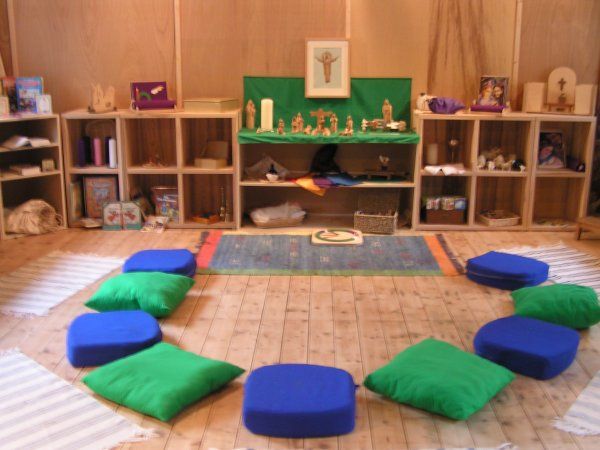
A "Godly Play" classroom

Godly Play is the name for a form of creative Bible Storytelling. Often used with children, but equally effective with all ages, it uses beautiful objects to creatively tell Bible stories. It encourages those listening to the stories to learn about them not through their personal experience and response to the story that they have heard. These responses are encouraged, but not coerced, through a series of questions framed: I wonder…

I wonder what you like best about this story…I wonder which is the most important part…I wonder where you are in this story?

Through this a skilled Godly Play storyteller can help those who hear the story cut past those things we think we are supposed to do when we are learning; like gaining knowledge or learning the right answers. Rather they help foster a personal response and spiritual engagement with God’s word and God’s presence in our lives.

In this Epiphany season as we reflect on these great wonders we need to remember again what it is to wonder. We need to wonder, as those travelling wise men did, on the path that God’s quiet but insistent voice is calling us to follow. We need to wonder in the manifestation of this call not in the centre of power, but amongst the oppressed and the downtrodden, amongst the forgotten and the neglected. We need to wonder on God’s decisive act on this day, that this good news revealed in the birth of this child was not just for the lost sheep of Israel, but for all humanity.

Epiphany is a time of wonder: of manifestations and miracles, of proclamations and Godly power. And for us to find this we must wonder. We must wonder again about the deep and transforming truth  God shows us in the birth of his son Jesus Christ, and wonder again on that deep truth that he

 …did come for to die.
For poor ordinary people like you and like I...