Monday, 1 April 2024

"Moist with one drop of thy blood, my dry soul" - Triduum meditations, Carlisle Cathedral 2024

These meditations, focusing on the poems of John Donne, were delivered at Carlisle Cathedral during Holy Week 2024.
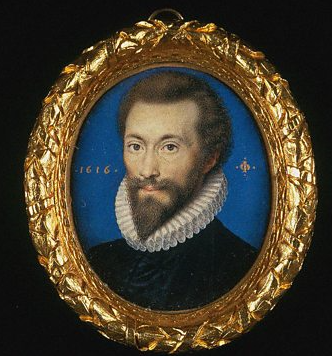


Maundy Thursday

How good a guest are you? By this I don’t mean do you strip the bed after you stay at a friend’s house or take your shoes off at the door. What I mean is how good are you, are we, at allowing ourselves just to be guests. How willing are we to be looked after, to receive the generosity of others, given not because we have asked for it, or because we deserve it, but this is the gift that host wishes to give to us.

Being a guest can be a strange thing. Perhaps because we live in such a transactional society, we often see the role of the guest as somehow part of a contract. We need to bring something, do something to help, earn our keep, sing for our supper. There is nothing wrong with this. Many a good host is glad of some extra help or a bottle or two to add to the collection. But sometimes the role of the guest is simply to be that. To be the guest. To rest in the generosity of the host without question or query.

If we track back a few centuries we find that there was not this same awkwardness in the relationship between the host and guest. Far from it. Early modern England, for instance, was shot through with the complex etiquette between host and guest. Most of this is lost to us now, but we do still find its imprint in the art and poetry of that time.

For instance, George Herbert’s greatest poem, Love III, is built around the structures and etiquette of the courtly dance which was the relationship between the host and the guest. That poem, if you know it, placing that between the author – as the unworthy guest – and “Love” as the generous host. The resolution coming when the guest accepts that their call is simply to be the guest and receive the gift that Love bestows on them for no other reason than that is what Love does.

Herbert’s biographers have pointed out that he would have learned this etiquette from his mother, the remarkable Magdalen Herbert, known and famed as one of the greatest hosts of the London society of her day. One of her most favoured guests was that other great religious poet of the seventeenth-century, John Donne. Through these coming days we will be using some of Donne’s poetry to punctuate and enrich the journey we will take together as guests of that greatest of hosts.

As we embark on that journey, I thought a good place to start would be with Donne’s own reflection on what it was to be a guest – a thought that he explores in a simple poem he wrote to Magdalen Herbert. It is, itself, not a great poem. One commentator has suggested it is in places “laboured, if a labour of love”. 

It is also, on this Maundy Thursday evening, perhaps a strange poem to begin with because its focus – Herbert’s namesake and for Donne her archetype – is Mary Magdalene. Mary Magdalene who is so crucial to the story of Good Friday and beyond is absent by name from the story that we heard in our Gospel reading this evening. Added to this is the theological calumny of Donne’s poem where he brings together – contrary to modern scholarship and, by his own admission, the wisdom of the Church Fathers – into his “Magdalene” three different women from the Gospels. First Mary Magdalene, who stood waited at the foot of the cross. Then second Mary of Bethany, who played host to Jesus with her sister Martha. And third the unnamed woman who washed Jesus’ feet with her tears, drying them with her hair.

However, with this poetic and theological licence understood, Donne’s words of praise provide a reflection on the relationship between the host and guest which not only patterned Magdalene Herbert’s remarkable life, but which can inform how we might begin this journey that lies ahead of us. 

What Donne stresses again and again through this short poem is the openness of the faith of this amalgamated “Magdalo” to Christ in all things. First as host – reflecting on the story of Jesus staying with Mary and Martha at Bethany – Donne speaks of the need to have the willingness to “harbour Christ Himself, a guest”. For this reason alone Donne feels Magdalene Herbert is a worthy successor to her names sake as host:

Increase their number, Lady, and their fame ;
    To their devotion add your innocence ;
Take so much of th' example as of the name,

But here Donne turns the call of the host on its head. The call, the openness, to act as host to Christ himself makes us in turn the guest of that greater host. That the generosity of the host becomes, in itself, an act of devotion which he saw both in these biblical archetypes, but also in Magdalene Herbert’s life.

That they did harbour Christ Himself, a guest,
    Harbour these hymns, to His dear Name address'd.

As we begin our journey through these coming days these patterns of courtly etiquette and manners might seem a strange place to begin. However, in their exploration of the relationship of the host and guest they offer a pattern for how we might respond to the invitation of these coming days. 

The question we might ask ourselves is the one I began with: how good a guest are we? Will we bridle in discomfort as we find our host take the role of a slave and wash our feet? Will we overdo it like Peter – and misunderstand the gift and action of our host and want to do more? Or will we receive that gift and, like Mary at Bethany, turn from the role of host to guest and simply sit and rest at the feet of our greater host. Will we – like Mary Magdalene – follow silently where our host leads us on this journey – from the upper room, to the foot of cross, and to a silent garden before dawn.

Will we have courage to put aside our pride, our self-importance, and allow ourselves to be the guest of our gracious host. A guest, as Donne says of Mary Magdalene, who was so open to the call of the host, that she was first to see and know the great truth of this journey we are to take. Mary Magdalene, whose:

        active faith so highly did advance,
    That she once knew, more than the Church did know,
The Resurrection;

And so as we begin this journey we might want to reflect on this relationship of host and guest. Not only as we gather at this table this night as we hear the call of our loving host and choose whether we, like Donne’s Magdalene, will ask how good a guest we can be.


Good Friday

John Donne is undoubtedly one of the great poets and prose stylists of the English language. In his own lifetime he was fated for his wit and linguistic ingenuity. In death not only were his publications instant best sellers, but there were countless cheap knock-offs by “J.D.” or “Dr Dunn” seeking to profit from his reflected glory.

Despite this undoubted brilliance there remains, for some, questions about the sincerity of his faith. Unlike his more earnest near contemporary George Herbert, Donne did not reject some more earthly themes explored in love poetry. Far from it. Some of his most brilliant and inventive poetry is his love poetry. Those who know his musing of the liberty and life of the humble flea would, I am sure agree. By this line of argument Donne was a brilliant man who fell into the life of the Church – and the prestigious role of Dean of St Pauls – more as an act of expediency rather than pious calling. It was, some have argued, through the Church that Donne – the “charmed” and “strong accomplished flatter” – found the wealth and standing in court and society that he had sought through his life. Ordination at the age of 43 was a last role of the dice after a failed life as an aristocratic secretary, MP, and diplomat.

The problem is with this line of argument is that those who use it clearly haven’t spent time with Donne’s poetry and his poetry focusing on Good Friday in particular. One of his finest and most ingenious poems is Upon the Annunciation and Passion falling on one day. In this Donne uses the calendrical coincidence in 1608 when Good Friday fell on the 25th March which, being nine-months before Christmas, is also the Feast of the Annunciation. Here he uses this temporal coincidence to reflect deeply on the physicality of the incarnation in conception and death.

This Church, by letting these days join, hath shown
Death and conception in mankind is one:
Or ‘twas in him the same humility,
That he would be a man, and leave to be:
Or as creation he had made, as God,

It is though another of his great religious poems, The Cross, which I would like to spend some time with today. In one sense this poem, although a deep and penetrating reflection on the cross, is not a Good Friday poem as such. Whether we think of Donne’s faith as sincere or not, he certainly followed the religious orthodoxy of the day. Living and ministering in the Church of the early seventeenth-century Donne stood with a religious establishment which was increasingly being assailed and attacked by more extreme Puritan elements in the church.

The Cross was written in 1604, a full ten years before his ordination. Its focus is the Puritan attacks on the use of crucifixes in Church and the signing of the cross at Baptism. Two particular practices of the Church of England which the more extreme Puritans saw as rank popery. Against this iconoclasm Donne offers a rich subtle reflection on how the cross binds us to Jesus who revealed his true self in and through the Cross.

Since Christ embraced the cross itself, dare I
His image, th’ image of His cross, deny?

So powerful is the cross, Donne argues, that is echoes through creation. It patterns the shape of our bodies, the pattern of our leisure, the form of the natural world, and even the shape of the heavens.

To stretch mine arms, and mine own cross to be ?
Swim, and at every stroke thou art thy cross ;
The mast and yard make one, where seas do toss ;
Look down, thou spiest out crosses in small things ;
Look up, thou seest birds raised on crossed wings ;
All the globe’s frame, and spheres, is nothing else
But the meridians crossing parallels.

What is the point, Donne points out to his Puritan adversaries, of removing crosses from our churches or liturgical practice when, if we have eyes, the cross is everywhere. This argument is, though, not simply a dig at some Puritan high-mindedness and do-goodery. These physical real world crosses point us to a deeper truth. That the cross is imprinted on every part of our lives.

Material crosses then, good physic be,
But yet spiritual have chief dignity.
[…]
For when that cross ungrudged unto you sticks,
Then are you to yourself a crucifix.

If we have the courage to look closely enough we find that the cross, the great sign of the shame of this great and terrible day, is imprinted on all of our lives. As we come to recognise the deep and indelible pattern of the cross we  begin to open to the presence of the cross in all things, and most deeply in ourselves. As we reflect more and more on the cross we are forced to open ourselves to the shame and cruelty of the cross. This sign of imperial cruelty and vengeance exists in one realm as a sign of the sinfulness and pride which we all carry within ourselves. 

pride, issued from humility,
For ‘tis no child, but monster ; therefore cross
Your joy in crosses, else, ‘tis double loss.

Far from hiding from the sign of the cross or removing it from our sight – as Donne believes the Puritans want – we need to be challenged and overshadowed by the cross. Because it is only then that we can truly recognise how we are woven into the fabric of a world where the cross was and remains a real and visceral reality. It is only in the stark reality of the cross that we can accept our place in the plain reality of this day. A reality summed up in the words of Donne’s contemporary, the Silesian Lutheran pastor Johann Heerman.

Who was the guilty? Who brought this upon thee?
Alas, my treason, Jesus, hath undone thee!
‘Twas I, Lord Jesus, I it was denied thee;
I crucified thee.

But for Donne it does not stop there. When we open ourselves to the true and abiding of nature the cross a new reality opens itself for us, because in the cross we find not only the shadow of our fallenness but also the reflection of God’s love.

Let crosses, so, take what hid Christ in thee,
And be His image, or not His, but He.

What Donne helps us see is this doubleness in the cross. That in this thing, this symbol which captures all the venality and cruelty of humanity this sign of our weakness and shame, this emblem of all that has brought us to this day is reflected back on us nothing else than the imprint of God’s love. Paradoxically it is only in spending time with the cross, in all its plain and unvarnished reality that we find the way to the truth that lies beyond it. That, to paraphrase St Paul, all our human wisdom draws us away from the cross, where God’s wisdom takes us straight to it. 

We live in a world where we flee from those things of the cross around us. We swipe past the hard stories we see on our phones. We turn our heads from the brokenness and cruelty of the world of which we are part. We each, in our own way, are heirs of those well meaning contemporaries of the Donne who would have us put away our crosses, who were themselves heirs of those who fled from that original cross and the place of the skull.

But today we are called to come to the cross. To look upon it and all the cost and pain it speaks of and, as Donne teaches us, put aside our own squeamishness and wisdom and:

Be covetous of crosses; let none fall ;
Cross no man else, but cross thyself in all.
Then doth the cross of Christ work faithfully
Within our hearts, when we love harmlessly
That cross’s pictures much, and with more care
That cross’s children, which our crosses are.


Easter Day

I do not think that I alone in finding it hard to find the words for this greatest of all days. The inhumanity of Good Friday has enough tragic resonances into our own world that we can find words aplenty. Similarly, the love and companionship of Maundy Thursday provides a pattern for our lives and language which one hopes we can communicate. But the sheer strangeness, the bewilderment, the super-mysterious nature of this day means that we cannot be faulted for being, at times, lost for words.

That is why I have often found it helpful to be guided through these days by words of a greater wordsmith. In our case the words and poetry of John Donne who died on this day, the 31st March, 1631. This though is not for the feint hearted. Donne’s language is dense and beguiling. It is as if through his words he is weaving complex tapestries which we are drawn deeper into the longer and more intently we examine them. In his poetry we find this brilliance not only their language but in their form and construction. No where is this more clearly seen than in the sequence of poems entitled La Corona.

La Corona was probably written in 1607 and is thought by many to be the poems which Donne sent to Magdalene Herbert prefacing them with his poem in praise of her which we reflected on on Maundy Thursday. The subject of these seven sonnets is the birth, life, death, resurrection, and ascension of Jesus. Together they form a cycle following the renaissance form of a “Crown” or Corona of sonnets where the sonnets are linked by repeating the final line of one sonnet as its first line of the next. The circle is then completed with the final line of the last sonnet matching the first line of the first sonnet. So Donne’s Corona begins and ends:

Deign at my hands this crown of prayer and praise.

There is, in Donne’s use of this ingenious form, all the brilliance we come to expect from him. But beyond that we can use these repeated lines to link and unlock the deep resonance and meaning of these days, particularly as we examine this pivot between the fifth and sixth sonnets – Crucifying and Resurrection – which turn on the line:

Moist with one drop of thy blood, my dry soul

As that line reflects back into the Good Friday sonnet it takes the form of a plea on behalf of the author. Returning to the themes found in Donne’s poem The Cross we find again that sense of deep personal culpability in the unvarnished truth and horror of the cross. In this place we discover that we were the ones who rejected Jesus, who retreated from him, who left him alone to carry his cross alone.

Lo ! where condemned He 
Bears His own cross, with pain, yet by and by 
When it bears him, He must bear more and die.

As the true cost and terror of the cross is made manifest on Good Friday all the author can do, all we can do, is plead for one drop of God’s love to remain with us in our dejection and failure.

Now Thou art lifted up, draw me to Thee, 
And at Thy death giving such liberal dole, 
Moist with one drop of Thy blood my dry soul.

It is with that baleful plea that Donne turns us from the desolation of Good Friday to the wonder and joy of today. Drawing from an image found in a hymn of Thomas Aquinas, Donne presents us with the transforming truth that in one drop of Christ’s blood is enough grace to wipe away the sinfulness and brokenness of the whole world. So his Resurrection sonnet begins:

Moist with one drop of Thy blood, my dry soul
Shall—though she now be in extreme degree 
Too stony hard, and yet too fleshly—be 
Freed by that drop, from being starved, hard or foul, 
And life by this death abled shall control 
Death, whom Thy death slew

This focus on this one small thing – one drop of blood – speaks again of the effervescence and brilliance of Donne’s own life and faith. Katherine Rundell, whose wonderful biography of Donne Super-Infinite I would recommend to anyone, captures this theme when she says:

[Donne] loved to coin formulations with the super- prefix: super-edifications, super-exaltations, super-dying, super-universal, super-miraculous. It was part of his bid to invent a language that would reach beyond language, because infinite wasn’t enough; both in heaven, but also here on earth, Donne wanted to know something larger than infinity.

With that in mind it is striking that as Donne reflects on the deep strangeness of the resurrection he does not, on this occasion, reach for these formulations. It is as if even that language is not enough. Rather in the simplicity of that “one drop” we are, paradoxically by Donne, being pointed to something “super-infinite”. That in that “one drop” there is something beyond our words and understanding can capture about the super-abundance of God’s love and grace for humanity.

That “one drop” carrying in it all the grace and forgiveness and love and transformation of the resurrection that our words could never and can never fully contain. It is as if Donne, in that “one drop” is pointing us to that beguiling conclusion to the Gospel of John where we are reminded of, in Donne’s terms, the super-infinity, of the things that Jesus did: 

that if every one of them were written down

the Evangelists tells us, 

I suppose that the world itself could not contain the books that would be written.

Or, as Donne said himself in the sermon he preached at the funeral of Magdalene Herbert – with whom we started this journey – that in the resurrection of Jesus Christ from the dead, where death is dead and love has conquered, the doors of heaven are flung open and each one of us is welcomed to follow and discover the promise of God’s love: 

in these new heavens and new earth, for ever and ever and ever, and infinite and super infinite forevers.

Amen.


Sunday, 7 January 2024

"Enough for him": a sermon for the Feast of the Baptism of Christ

There is always a strange pleasure in discovering something unexpected and new in the deeply familiar. This happened to me over these weeks of Christmas. Inspired by a Christmas book, which tells the story of the formation of some of most well-known Christmas carols, I found myself listening with newly attuned ears to the words which were seemingly so familiar to me. In particular to the words of In the bleak midwinter.


Often listed in public votes as the nation's favourite Christmas carol, Christina Rossetti’s beautifully simple carol, which she entitled A Christmas Carol, is a masterpiece of simple elegance and meaning. The author of my carolling guidebook says of it:

It stands as a perfect example of her almost uncanny ability to distil complex thoughts and emotions into a language of almost childlike directness.

We can all look at those words and been drawn in by the simple imagery which captures the impossible majesty of the Christmas season. Like all great poetry we have our breath taken away by the final line’s injunction for the simple gift of our heart. But for me the word which has captured my imagination for the first time in the thousands of times listening and singing these famous words is the simple word which frames the third verse: "Enough". Here is that verse in full.

Enough for him, whom Cherubim
Worship night and day,
A breastful of milk,
And a mangerful of hay:
Enough for him, whom angels
Fall down before,
The ox and ass and camel
Which adore.

Here this one word captures much of the mystery and depth of the doctrine of the incarnation. That the God who, as we heard in our reading from the opening of Genesis, made the heavens and the earth, was content with the enough of his mother’s milk and a simple bed. That the creator of all things. as St Paul says elsewhere:

emptied himself,
   taking the form of a slave,
   being born in human likeness.
And being found in human form,
   he humbled himself
   and became obedient to the point of death—
   even death on a cross.

The God we know in Jesus is a God who comes to us, who communicates his grace to us, in those things which are enough for him. This profound truth is not simply limited to our sentimental images of the Christmas story.

Today’s feast – the Feast of the Baptism of Christ – carries within it that theme of humility, the sense of “enough-ness” which characterises the deep meaning of the incarnation. As we heard in our Gospel reading, Jesus inaugurates his public ministry not with the Judean equivalent of the showy declarations of power which will accompany the political campaigning of this coming year. No. Jesus begins his public ministry alongside the multitudes from Judea and Jerusalem seeking out John the Baptist and his baptism of repentance. It is in this place, alongside people seeking to remake and reform their ordinary lives, that Jesus is baptised and the truth of the incarnation is heard in the voice from heaven. In this place of “enough” we discover who Jesus truly is:

You are my Son, the Beloved; with you I am well pleased.

As we continue through this season we will hear how God reveals Gods-self to us in Jesus in the ordinary things of life: in a celebration of life and marriage at the wedding at Cana; in the religious patterns and ceremonies of his time as Jesus is proclaimed as the Light of the World by Simeon and Anna; and today in the gift and cleansing power of that most simple and elemental thing, in water.

This season of Epiphany, this season of revelation and manifestation, frames who God is for us in Jesus. Developing the poetic frame of Rosetti’s words: we will be shown that for Jesus five loaves and two fish were enough for him to feed thousands; that sharing a table with prostitutes and tax collectors was enough for him to open a vision of the kingdom of heaven, and that the public humiliation of a slave’s death was enough for him to show the breadth and length and the depth and the height of God’s love. As we come to the end of the opulence and generosity of the Christmas season the idea of “enough” is one which should not only frame our understanding of who God is for us in Jesus, but also challenge how we relate to the world created by that same God who saw that it was good.

Another book I have been reading over the last few weeks is called How much is enough? Money and the Good Life by the father/son partnership of economic historian Robert and philosopher Edward Skidelsky. In it they argue that one of the main problems for us, particularly living in the developed world, is that we have lost sight of a true sense of enough. Too much of our life is built not on “enough” but on “more”. Now the authors do acknowledge that there is nothing intrinsically wrong with “more”.  The economic development encouraged by a sense of “more” has brought about huge benefits in many people’s material conditions. But this is a two-edged sword exalting with it, particularly in its modern form “some of the most reviled human characteristics, such as greed, envy and avarice.”

The constant desire for “more”, they argue, has not made us happier. Far from it. Rather the constant searching for “more” has made our modern societies unable to recognise what can make for the balance of work and leisure which characterises, in the authors mind, a truly good life. More than this the corrosive power of “more” has deeper and lasting effects. Growth for its own sake, they argue, “is not only failing to make us happier, it is also environmentally disastrous”.

Through their book the authors make a series of practical suggestions for how we could reorder our lives and world around the principle of “enough” and not simple “more”. Particularly for those of us who live comfortable lives it asks “how might a society which already has 'enough' think about the organisation of its collective life”.

We have, in a short time, travelled a long distance from my Christmas musings on a favourite carol to the structures and building blocks of modern society. But what ties this all together is a sense that unless we can capture the liberating power of “enough” we are in danger of being pulled into the siren calls of “more” with all the corrosive and destructive tendencies that brings. Tantalisingly as they conclude their book the Skidelskys’ ponder whether it is possible to pursue a vision of the common good build on a real and practical sense of “enough” without a religious impulse to stir and inspire us.

In this Epiphany season, in this time of revelation and manifestation, we find that God in Jesus presents us God’s transforming promise through those small things, those simple things which were enough for him. As we emerge blinking from the warmth of Christmas into the light and reality of the new year, particularly as we look ahead to the choices that we will be called to make not least in a General Election, we might be wise to remember again the deep wisdom and power of that simple word “enough”. 

Not simply as a way of discovering again the deep and transforming truth of who God is for us in Jesus. But also how, transformed by that truth, we might change our lives and transform our world if we had the courage to turn away from the siren calls of “more” and live and work and rejoice, as Jesus did, with those things which were enough for him. 


Sunday, 3 December 2023

Absence and Presence - a sermon for Advent Sunday

Advent is the great season of absence. All the great poetry and hymnody of Advent speaks and yearns of this absence.

“O Come, O Come, Emmanuel”

“Come thou long expected Jesus”

“Lo he comes, with clouds descending”

All our attention is pointed towards a coming presence which, by its very nature, speaks of the absence that we experience at the heart of Advent. 

For many of us that absence has become something of a battle of wills against the oncoming presence of the Christmas season. As the march to Christmas begins earlier and earlier the desire of many to hold back that tide, to hold the place of absence that Advent speaks of, becomes stronger. Some of us, well I can only speak for myself, can place a perverse pride in holding off eating a mince pie, sipping a mulled wine, or putting up anything that smacks of a decoration, for as long as possible. In this modern Advent ritual, the absence of Advent and the presence of Christmas play a tug-of-war with only one true winner.


This playful pattern of absence and presence however only scratches the surface of the great spiritual and even existential truth that the absence at the heart of this season points us towards. Our readings today both speak of absence. From Isaiah we heard a prayer of longing echoed in the great Advent prose which opened this service. Here Isaiah yearns that God, despite the sinfulness of God’s people, will break into a reality seemingly devoid of God’s presence:

O that you would tear open the heavens and come down,
   so that the mountains would quake at your presence—
[…]
to make your name known to your adversaries,
   so that the nations might tremble at your presence!

In our Gospel reading Jesus, though present in the telling, describes the terrifying place of absence that will mark the time before his coming again. Where:

the sun will be darkened,
   and the moon will not give its light,
and the stars will be falling from heaven,
   and the powers in the heavens will be shaken.

These visions of the absence of Advent take us far beyond the abstemious habits that some of will seek to model in the coming days and weeks. This is a terrifying reality where God appears to be visibly and palpably absent. Another great Advent hymn, one which has though fallen from our hymn books, captures something of the existential fear of this truth.

“O quickly come, dread Judge of all;
for, awful though thine advent be,”

In Advent we are challenged to look deeply into the truth of our faith. That hard truth of our faith that however hard we might look for God’s presence we most often find ourselves in the place of a double absence spoken of in our readings today.  The first absence focuses on our present reality, where we seek the presence of God in a world where God appears to be absent, and where many remain indifferent to this reality. The second is an eschatological absence. One which looks to the end of this this present age, between the stories of the first coming and the promise of the second. A place where the Church stands longing for God’s presence in Jesus – known by the apostles and promised in the new Jerusalem – but recognisable only to us in the stories of the past, hope of the future, and the vivid absence of our present.

In these two experiences of absence there is a danger that absence and presence are placed in opposition to one another. If though we look to those stories of Jesus’ presence in the Gospels we find again and again that the great stories of God’s presence through Jesus lead to, or are defined by, an absence. Jesus’ baptism, that moment when he is revealed as God’s anointed, is followed by his withdrawal and absence into the wilderness. The truth of the resurrection is fulfilled not only by the presence of the risen Jesus, but the absence of the Cross and the empty tomb. The tangible experience of God’s Spirit in the gift and feast of Pentecost is promised by Jesus, but only once he absents himself and is taken into heaven at the Ascension.

Advent teaches us to seek and know this great paradox of our faith. That God, in Jesus, reveals God’s presence, very often through his absence. Knowing this these absences we experience now take a new form. They are no longer vacuums, but places where, if we have the courage to look, we can discover God’s presence. The Welsh priest poet RS Thomas, that great bard of paradox, speaks of the truth of presence in absence in his poem Via Negativa:

        God is that great absence
In our lives, the empty silence
Within, the place where we go
Seeking, not in hope to
Arrive or find.

As the poem goes on he seeks to take this challenging, but often abstract truth, and ground it in realities of our lives. Perhaps echoing Jesus’ vision of the absence of star-less sky, he speaks of God as “the darkness between the stars”. Then as footprints which God has left which we follow. Then with a physical and visceral truth he says:

        We put our hands in
His side hoping to find
It warm.

However, we do it, Advent calls us not to simply seek out these places of absence, but to attend to them, and in that attention discover God’s presence through them.

I had an extraordinary experience of this recently. A few weeks ago, I was able to take a few days away from the Cathedral for a time of personal retreat. For a few days I focused my reading, reflection, and prayer on the themes of Advent and particularly the theme of absence. On my final morning of retreat, I decided I would try to ground this reading by taking myself to a physical place of absence. So, I drove and then walked along Hadrian’s Wall to the gap in the Wall where, until recently, the great Sycamore Tree stood. 


As many of you will know, this was a place very familiar to me and my ministry and so there was both a familiarity and shock as I walked up the path, seeing the outline of a landscape which was both reassuringly familiar and deeply strange. In the middle of that familiar dip in the horizon stood a great gap, a great absence. Where the tree had stood there was now just a bare stump. And there with me other walkers and pilgrims stood in silence and looking deeply into that place of absence. But as we looked into that absence, and came closer to where the tree had stood, a small sign, placed there by the National Trust, came into view. It reads:

“This tree stump is still alive
If we leave it alone it might sprout new growth”

I very much doubt this simple sign was intended to articulate so well the deep paradox and truth of absence and presence that lies at the heart of this great season. But for me, in that moment, it spoke more deeply of this truth than all the hymns and poems and sermons I could find. Having gone to that place looking for the reality of absence I found unexpectedly and beautifully, a promise of presence echoing Isaiah’s great words of Advent hope and promise:

A shoot shall come out from the stock of Jesse,
   and a branch shall grow out of his roots.
The spirit of the Lord shall rest on him,
   the spirit of wisdom and understanding,
   the spirit of counsel and might,
   the spirit of knowledge and the fear of the Lord.
His delight shall be in the fear of the Lord.

The promise of Advent, not only for this season but also for our life of faith, is that in God’s seeming absence is always a presence breaking in. Our task and invitation through this season is to seek and attend to those places and spaces and times of absence that punctuate the realities of our everyday lives; to spend time with them; and speak into those places of seeming absence that great Advent prayer:

“Amen, Come Lord Jesus.”


Sunday, 12 November 2023

The wisdom of silence: a sermon for Remembrance Sunday

We gather on this day of solemn and national remembrance with the storm clouds of war gathering across the world. On this day when we mark the end of war and the commitment to peace, we find ourselves surrounded with the news and stories of conflict all around us.The two-year old war in Ukraine is calcifying in a stalemate with a fifth of that country still occupied by the armies of Russia. In Israel and Gaza the simmering tensions of that place have, in the last two months, erupted into bloody and cruel fighting.

As we seek to make sense of, and understand more fully, the reality and nature of these conflicts we find our vision blurred by new and competing factors. Instead of the receiving a steady supply of information filtered through recognised means, the news we hear comes from many and different sources. Grainy images and videos on mobile phone, self-appointed online experts, and most worryingly of all, images altered and manipulated by artificial intelligence, compete with the traditional forms of media as we seek to understand of the truth of this intense and complex conflict.

Added to this are the ways in which these conflicts have become mapped onto the political and cultural touchstones of our own society. Strong opinions are voiced and sides are taken which can struggle to hold the decades and centuries of relationship and difference at the heart of this conflict. Passionate claims about the brutality of one side and innocence of the other are painted in such bold and vivid colours that it can be hard to discern the nuance and meaning, let alone truth within this terrible conflict.

In the face of all this complexity I have found myself again and again drawn to the wisdom of the twentieth-century philosopher Ludwig Wittgenstein who famously said that “what we cannot speak about we must pass over in silence.”

When faced with the seeming complexity of human conflict there is biblical precedent for turning first to silence. In the account of Jesus’ trial and cross-examination in the Gospel of John we find Pilate seeking from Jesus’ clarity of who he truly is against the claims and counter-claims of his accusers. Here is a story of someone straining to find and discern the truth through a cacophony of noise. In this passage Pilate asks Jesus a series of questions and after failing to extract from Jesus a satisfactory answer Pilate remarks – as we might faced with the complexity of our own age – “what is truth?” And to this final question Jesus responds to with silence.

As we search for truth, and faced with such deep and seemingly intractable complexity, there is a simple eloquence in silence. A simple eloquence which we will all share in today. The tradition of holding a time of silence in the midst of remembrance is one which is yoked to the commemorations of this day. Although it is not clear who originated the idea of a time of silence, it was already common in the final months of the Great War for daily times of silence to be held to remember those who had already died. The idea was then taken forward with the encouragement of King George V who, in preparation for the first anniversary of the Armistice in 1919, called for “locomotion [to] cease, so that, in perfect stillness, the thoughts of everyone may be concentrated on reverent remembrance.”


I encountered the simple eloquence of this yesterday on Armistice Day. Meeting someone in the hustle and bustle of the Cathedral Café suddenly and gently peace and silence broke out at 11am. Without announcement  or fanfare the few dozen staff and customers gathered there held a time of remembrance and silence.

It would though be wrong to think that that silence is a retreat from the complexities that we face. In silence we are drawn to two important truths. The first is that in silence we can look beyond our own concerns and prejudices. Another philosopher, this time the French seventeenth-century philosopher Blaise Pascal, reminds of this truth when he stated a little provocatively that: “all of humanity's problems stem from man's inability to sit quietly in a room alone.” In silence we learn to get out of our own way and find the space to recognise the deeper and more complex truths the world presents us. 

The second truth is that, within the Christian tradition, it is in silence that we most clearly hear still small voice of God’s love. Silence stands at the heart of the writings of another great philosopher, this time St Augustine, on whose traditions and teachings this Cathedral were founded. For Augustine it is in silence that we hear the deep truth of God. As he wrote: “If you are silent, be silent out of love. If you speak, speak out of love.”

This is the silence that Jesus presents to Pilate, this is the silence we share in today, this is the silence that speaks to us from the silence of the cross. In this silence, the truth that Jesus draws us to is that against all the hatred and bitterness of the world, amongst all the self-serving statements and bitter recriminations which mar this and every age, stands one clarion truth revealed through the silence of the cross.

No one has greater love than this, to lay down one’s life for one’s friends.

The truth we hear through our silence – whether in Pilate’s court, or own prayers, or as we hold before God the names and memories of those who have died in time of war – is the truth and power of love to change and transform the world. It is a truth that convinced St Paul that:

neither death, nor life, nor angels, nor rulers, nor things present, nor things to come, nor powers, nor height, nor depth, nor anything else in all creation, will be able to separate us from the love of God in Christ Jesus our Lord.

It is this truth which binds our remembrance of past conflicts to the challenges of this present time. 

It is often said that those who cannot remember the past are condemned to repeat it. I am not always convinced by this idea. What I do know, though, is that whatever the future holds, whatever means there might be to remake our broken and fractured world, it will never succeed unless it is built on the truths and peace and sacrifice and love which we will hear if we tune our ears again to the silence that lies at the heart of this day.


Sunday, 1 October 2023

"It seemed that I saw a most wondrous tree" - a sermon for the seventeenth Sunday after Trinity.

On Thursday morning many of us woke to news that the landscape of our region had changed irrevocably.

After the storms of the night before it was discovered that the Sycamore tree, which had stood as a solitary sentry in a clear gap on Hadrian’s Wall had fallen. Initially it was thought that the wild winds of the north had finally claimed the tree, but quickly a more sinister truth emerged. 

The tree had fallen not by natural means or by an act of God, but by human hands. Almost unbelievably someone had felled the tree. This was not an act or wild and frenzied destruction, but one achieved with cold and calculated efficiency. In the dead of night someone had taken professional equipment, marked the cutting line in white paint, and then felled it with a professional skill which would, in other circumstances, bring the admiration of the most experienced workers of the nearby forests of Wark and Kielder.

As many of you will have seen, and some of us will have felt, this act has brought about an unexpected level of grief and anger. Perhaps exacerbated by the calculated nature of this action, it has asked many to reflect on what that tree meant to them. It is a reality which means something to me as well as I was, for six-and-a-half years, that tree’s Vicar. I know the family that farms that land, the people who work in the nearby visitors’ centres and pubs, and have talked often both there, and here in Carlisle, to walkers looking forward as they made their own pilgrimage to the Sycamore Gap.

The word “iconic” is overused in our culture, but the Sycamore Gap is, or was, iconic. When I moved to be Vicar of Haydon Bridge and Beltingham with Henshaw - what we later called the "Parishes by the Wall" -  I shared a photo of the Sycamore Gap. Well more accurately I shared a picture of Kevin Costner as Robin Hood standing at the Sycamore Gap to announce my appointment to friends. The prominence of the Sycamore Gap in our popular imagination came for many from that film, its improbable placement between Dover and Sherwood Forest giving it a notoriety and fame in our popular imagination.

The Sycamore Gap is also ubiquitous. When we were thinking of a logo for the Parishes by the Wall we considered using the Sycamore Gap. We then discounted the idea as it would not differentiate us from the local schools, accountants, plumbers, holiday lets, and very excellent beer who all used the image as their logo.

However, there was more to the Sycamore Gap than simply begin in a scene from a famous film or a ubiquitous image. It was intrinsically aesthetically beautiful. The tree, which was evenly and symmetrically shaped, standing in the middle of an equally symmetrical gap in the Whin Sill; it was “picture perfect”.

But none of this, in itself, explains the strength of reaction that felling of this tree has caused over the last few days. As I have been reflecting on this, I have found myself reflecting on why so many people were drawn to visit and walk to the something which, some might say, was “just a tree”.

Trees, of course, play a defining and recurring role in our shared cultural and spiritual life. All cultures have myths and legends built around the simple elegance of trees. Whether that is Ash trees as the Tree of Life of Norse mythology; or the evergreen trees of North America which defined the creation myths of their own culture; or closer to home, the role the oak tree has played in the spiritual pre-history of these islands where the druids were literally “oak men”.

As we reflect on the power of trees in our popular consciousness it is impossible to find one simple root or basis for this identity. Reflecting on the tree of the Sycamore Gap I found myself recalling the theories of anthropologists of religion, who have pointed out how trees act as a break between the horizontal realm of our earthly experience and the vertical realm of the heavenly and the divine.  Like a standing stone, and later great church buildings, they draw our eyes to heaven. Trees, often solitary trees, standing in the landscape create and intuitive link between our rootedness on earth and the heavens that their bows and branches draw our eyes too.

It would be possible to discount and dismiss all of this as mere folk-religion, except for the way in which Christian iconography and writing has drawn on this image. One of the finest examples of this is in one of the great poems of Anglo-Saxon England, The Dream of the Rood.

It begins with a vision of the Rood, or rod - the old English name for the cross - as a glorious and bejewelled tree:

It seemed that I saw a most wondrous tree
raised on high, wound round with light,
the brightest of beams.

As the elegy to this tree continues the voice of the narrator changes to that of the tree itself.  Through the voice of the tree we hear it tell of waiting to be felled. Thinking this would be an ignominious fate, the Rood learns that, instead, it will carry not a criminal, but the Son of God. The tree then becomes our Lord’s retainer, feeling and carrying the wounds and pain of his crucifixion which became a sign and badge of honour for that unsuspecting tree:

Lo! the King of glory, Guardian of heaven’s kingdom
honored me over all the trees of the forest,

As the voice then turns back to the original narrator we hear of this link between the horizontal and vertical, of the eloquence of the tree to point us beyond ourselves to heaven. So, we are told of the ongoing power and dignity of the Rood to link us between the human violence of the cross and the heavenly hope and victory it points us to:

He who here on earth once suffered
on the hanging-tree for human sin;
He ransomed us and gave us life,
a heavenly home. Hope was renewed
with cheer and bliss for those who were burning there.

We are often told that we live in a less religious world. I think that the outpouring and emotion I have seen over the felling of a free over the last few days would seem to counter that narrative. It is true that we live in a less religiously literate world. The language of faith and hope, of judgement and redemption and the stories than accompany them are less present than they were even a generation ago. What remains though is an often inarticulate longing for the numinous, for the other which simple signs in our landscape, like the simple eloquence of a tree in a dip in the horizon, speak of. It is for this reason, more than its faded fame in Hollywood movies that the tree at the Sycamore Gap meant so much to people.

It was a place where couples, whose weddings I took, got engaged. Where the ashes of dearly loved relatives whose funerals I conducted were scattered. It was a place which weary pilgrim and walkers, taking on the most challenging section of the Hadrian’s Wall path, would seek and long to get to. It was a place, to quote the words of that great prayer of St Augustine which we heard echoed in our Collect today, that so many found rest for their restless hearts.

In our gospel today Jesus invites us all, through a parable, to seek rest for our restless hearts. In this parable it is not by a tree, but in a similarly powerful metaphor, in a vineyard. Here, Jesus says, is a place to which all are called and all are welcome. A place which makes saints of sinners if they only have the courage to truly seek and know God in that place.

And that, after all, is the longing for which we all seek. A place where we can be truly ourselves. A place where we are truly loved and known. That place might be a tree on a distant frontier, or a Cathedral on that same wall. 

Wherever it might be, we need to know that, in God’s love, we are welcome to find and seek that rest. And that nothing, not even the might or cruelty or selfishness of man, can separate us from that truth.


Sunday, 23 July 2023

God's judgement and mercy - a sermon for the seventh Sunday after Trinity

Wisdom 12: 13, 15-19; Matthew 13: 24-30, 36-42

John Martin, The Last Judgement

As I have been reflecting on today’s gospel reading and its theme of judgement, and particularly of God’s final judgement on us all, I kept returning in my mind to words I have commonly used when taking funerals. Those words begin like this:


God alone is holy and just and good.
In that confidence, therefore, we commend you
to God’s judgment and mercy,
to God’s forgiveness and love.

As I then sat down to start writing this sermon, I thought I would just confirm where I had got these words from. After a period of extensive searching I couldn’t find them in any of the Church of England’s official liturgies. Now as someone who takes my vow of canonical obedience to use “only those forms of worship authorised and allowed by canon” I started to worry that through all my ordained ministry I had been using forms of words and prayers plucked from some unknown and unattributable source. After more searching, I discovered that these words – which I think I must have picked up from colleagues when I was a curate – actually come from the funeral service in the Prayer Book of the Church of New Zealand. 

As I disappeared and then reappeared from this little liturgical rabbit-hole I was struck by one thing; how little our liturgies at the time of death, and beyond that our worship more widely, speaks with any confidence of the theme of judgement. For instance, when I was searching for these texts through the online versions of the Church of England’s funeral liturgies, I discovered that judgement is only mentioned eight times. Seven of these are either in, or references to, biblical texts, and only once is it used explicitly in the prayers we are asked to use. And even then, this is a third alternative prayer. Similarly, as I was searching for the source of the words I opened this sermon with, I found more than one example of their use where the word “judgement” had been removed.

Why, I wonder, are we so anxious about judgement?

There are, I suspect a whole series of reasons. One reason is that questions of a God who will judge us are difficult to square with the image of a benign and loving God. That then links to our desire not to think too hard about how we might fair on that fateful day. Then we reflect on how thoughts on judgement draw us uncomfortably to the darker angels of our identity and humanity.

John Martin, The Great Day of His Wrath

Too often in human history the justification of judgement has been used to excuse acts of human cruelty in the name of some greater cause or hope. For instance, in 1209, during the siege of the French city of Bezier during the Albigensian crusade, the Cistercian Abbot Arnaud Amarlic was asked how the invading Catholic army could distinguish between the orthodox Catholics and the Cathars they had come to kill. “Kill them all”, Arnaud is said to have cried in judgement, “God knows which are his own”. Such terrifying certainty in judgement is not limited to those seeking a religious justification. Several centuries after the massacre in Bezier, during the aftermath of the French Revolution, the revolutionary General Turreau took troops to quell and anti-revolutionary uprising in the Vendee. There, in an echo of Arnaud’s judgement, he was again asked how to distinguish between those loyal to the revolution and those they had come to put down. His judgement was terrifyingly clear:

I order you to burn down everything that can be burned and to spear with your bayonets all the inhabitants you encounter along the way. I know there may be a few patriots in this region – it matters not, we must sacrifice all.

When faced with this history of the rashness and cruelty of human judgement it is not a surprise to find that we struggle to make sense of this theme when we encounter it in our theology and in our reading of scripture and in our image of God.

Judgement – and in particular God’s final judgement – is at the heart of our gospel reading this morning. Known as the Parable of the Weeds, Jesus helps us navigate this theological conundrum. He does this by speaking of two differing forms of judgement. The first is recognisable to us in their extreme form in the examples from Bezier and the Vendee. In the parable the master’s slaves, when they discover the weeds growing amongst the good wheat, suggest a quick and decisive response:

The slaves said to him, “Then do you want us to go and gather them?”

This is the response of human judgment. A quick, clear, and decisive response, where the utilitarian desire is to cut away and remove the perceived problem comes, for those who suggest this, with the acceptable cost of destroying the good grain.

Against this we hear of a second form of judgement. Responding to the slaves, the master instead counsels patience. To the slaves question the Master replies:

No; for in gathering the weeds you would uproot the wheat along with them. Let both of them grow together until the harvest; and at harvest time I will tell the reapers, Collect the weeds first and bind them in bundles to be burned, but gather the wheat into my barn.

On one hand we could argue that this second form of judgement merely postpones the fateful judgement what we are squeamish about now. That whenever it occurs judgement brings with it a judgement that some will be saved and others will not. But what this reading misses is the role that God’s patience and love play in this second form of judgement. We have a glimpse of this more benign form of judgement in our reading from the Book of Wisdom. Here God’s judgement is always tempered by mildness. However, the ultimate sovereignty and power of God is not denied.

In our parable Jesus takes this tempered and patient judgement and brings us to a deeper understanding of the inextricable link between God’s judgement and the love God reveals to us in Jesus. It is a form of judgement which speaks, as all Jesus’ parables do, not about us, but about the true nature of God. That, as the prayer I opened this sermon with reminds us, God judgement comes interwoven with God’s mercy, and forgiveness and love.

In his poem Judgement the great English priest-poet George Hebert reminds us of the inextricable link between God’s judgement and God’s love for us in Jesus. The poem begins with a vision of the terrifying forms of human judgement which we do often project onto our understanding of expectation of God’s judgement:

Almightie Judge, how shall poore wretches brook
                                  Thy dreadfull look,
Able a heart of iron to appall,
                                  When thou shalt call
          For ev’ry mans peculiar book?

Faced with this terrifying and dread-filled image of judgement, Herbert suggests that some will seek to present a polished, if not honest account of themselves to God. 

What others mean to do, I know not well,
                                  Yet I heare tell,
That some will turn thee to some leaves therein
                                  So void of sinne,
          That they in merit shall excell.

But, Herbert argues, this cannot stand. At the last judgement we will be called to be honest and open with God about all our failings. That all of us, returning to the image of our Gospel reading, are not one thing or another, but bundles of weeds and wheat in different measure.

However, as he imagines us presenting this ledger of our lives to God only to find that our failings, our faulty, our sinfulness has already been accounted for in God’s love for us in Jesus. It is, Herbert reminds us, Jesus who gathers to himself all the sinfulness and fallenness of our lives in the love and sacrifice of the cross. As the poem concludes:

But I resolve, when thou shalt call for mine,
                                  That to decline,
And thrust a Testament into thy hand:
                                  Let that be scann’d.
          There thou shalt finde my faults are thine.

What our parable reminds us today, and what George Hebert’s poem invites us to reflect on, is the reality that – despite our squeamishness – God’s judgement is something on a vastly different scale and scope than our human models and experiences of judgement could ever show.

God’s promised judgement is not something we should fear or try to hide from. God’s judgement is, and will be, a source of comfort because this judgement does not start with human certainty and confidence. Rather this divine judgement comes from the source of our God who is patient and loving. It is, and will be, a judgement that draws us into the true revelation of God’s mercy, and forgiveness, and love.

John Martin, The Plains of Heaven


Sunday, 21 May 2023

Comfort for the comfortless: a sermon for the Sunday after Ascension.

On my bookcase in my study I have a copy of what I think is a wonderful book. It is called the Tutorial Prayer Book. It is, essentially, a commentary on The Book of Common Prayer. Going through the text section by section it shows the differences between the 1662 text and previous versions of the prayer book. However, more interestingly, it shows the more ancient sources for the prayers which Thomas Cranmer both rendered into English, and tweaked theologically to be in sympathy with the reforming agenda of which he was a key advocate.

Perhaps the clearest example of this is in the prayer of preparation, or the Collect for Purity, which we began our service with today. This prayer will be so well known to many of us that we don’t even look at the words. So when the president says:

Almighty God…

we fall almost instinctively into…

…to whom all hearts are open
All desires known, 
And from whom no secrets are hidden.

A dip into the indispensable Tutorial Prayer Book though tells us that this was originally a prayer for the priest's preparation from the medieval Sarum Rite. In that prayer this is a singular not collective prayer, it said in private and not public, and focuses singularly on the purity of the priest before the altar.

As a good reformer Cranmer takes that prayer and turns the focus away from the priest and turns it on  the people gathered in worship. Through its shared language we commit together, despite our own shortcomings, to meet God in and through this act of worship; that we might perfectly love God and worthily magnify God’s holy name. Cranmer takes this private prayer of the medieval church and with the tweak of a verb and a change in emphasis articulates one of the central tenets of his reformed catholic faith.


Another place where we encounter Cranmer’s genius is in the collect set for this Sunday which stands between Ascension Day and Pentecost. Again, a quick dip into the Tutorial Prayer Book shows that this collect was not drawn from a mediaeval collect for this Sunday, but instead from one of the antiphons – one of the short prayer-anthems – used around the recitation of the Magnificat at the service of Vespers. A prayer which was, according to legend, used by the Venerable Bede on his death bed. This antiphon can be translated:

O Lord, King of glory, Lord of virtues, who today didst ascend in triumph above all heavens, do not leave us orphans, but send upon us the promise of the Father, even the Spirit of Truth.

In composing today's collect, Cranmer took this antiphon and made two key changes. The first is a technical one, moving it from a prayer to the Son, to being a prayer directed to God the Father:

O God the King of glory, who hast exalted thine only Son Jesus Christ with great triumph unto thy kingdom in heaven

The second change is more profound and shows Cranmer’s brilliance. Both the original antiphon and Cranmer’s collect are used in the space we now stand in between the moment of the Ascension and the coming of the Holy Spirit at Pentecost. In the case of the antiphon being used on the evening of Ascension Day, the collect on the Sunday following.


In that way both the antiphon and the collect speak of the disorientation of this moment.  Jesus who for the disciples, and for the rhythms of our worship, has been front and centre suddenly is removed from our presence. Since Christmas we have walked with the life of Jesus. We have been anchored by the narrative of his life. From his birth, through his teaching, to his death and resurrection. Now as Jesus disappears from eyes we are suddenly unmoored from that certainty.

In this place of disorientation the antiphon prayers plainly: “do not leave us orphans, but send upon us the promise of the Father, even the Spirit of Truth". In place of this direct invocation Cranmer offers us something more subtle but more luminous for it. Rather than use the plainer “orphan” Cranmer draws us unwittingly into a word play on the translations for the Holy Spirit from the original Greek. 

In John’s Gospel the Holy Spirit is referred to in the Greek as, amongst other things, parakletos. This can be interpreted in many ways. Sometimes as guide, in some as an advocate, for some a lawyer for the defence. However, in our translations it is most commonly translated “comforter”. Cranmer then uses that idea of the Holy Spirit in a punning word play with another section from John’s Gospel which is the inspiration for the original antiphon his collect is based on. In that passage of the Gospel Jesus says he will not leave his disciples orphanos – in some translations “orphans” but in others “comfortless”. Cranmer then takes this coincidence of language to create the spirit of this great Collect asks:

We beseech thee, leave us not comfortless; but send to us thine Holy Ghost to comfort us, and exalt us unto the same place whither our Saviour Christ is gone before.

Cranmer’s collect draws us seamlessly into the disorientation of these days, and uses that sense of disorientation, of comfortlessness, to point us to the gift that will come to inspire and draw us forward. That gift which Cranmer refers to in his translation of the Te Deum elsewhere in the Book of Common Prayer as “The Holy Ghost : the Comforter”.

This is all very well and good and very interesting you might ask, but what does this mean to us here and now in our faith? Well the artistry of this collect comes not in its subtle use of language and clever word play, but in the place is stands in our liturgical year and in our life of faith. 

Today we stand in a place which is more common for many of us than we might like to admit. Today we are in that place where Jesus is suddenly distant and out of sight. We are in that place which many of us find ourselves more often than we care to admit. A place where we seek God, seek the real presence of Jesus, but feel merely an absence. It is that place described most eloquently by the great bard of God’s absence R.S. Thomas when he says:

It is this great absence
that is like a presence, that compels
me to address it without hope
of a reply.

If I am honest, very often my prayer life and my experience of faith can feel like this. Looking and seeking God and finding what feels like an absence.  And into that absence, that sense of disorientation, that place of comfortless, we can pray not only today, but all days, Cranmer’s great words of hope and expectation. Where we beseech God to:

leave us not comfortless; but send to us thine Holy Ghost to comfort us, and exalt us unto the same place whither our Saviour Christ is gone before.

Amen.